Malta in winter is a different experience altogether. The Mediterranean archipelago, made up of three inhabited islands, reveals itself in a calmer, more accessible light between December and March. Temperatures remain mild, historical sites can be visited without crowds and prices drop noticeably. I particularly appreciate this time of year for exploring Valletta and Mdina in a tranquillity that is hard to find in summer.
Here is all my advice for visiting Malta in winter: activities, weather, temperatures…
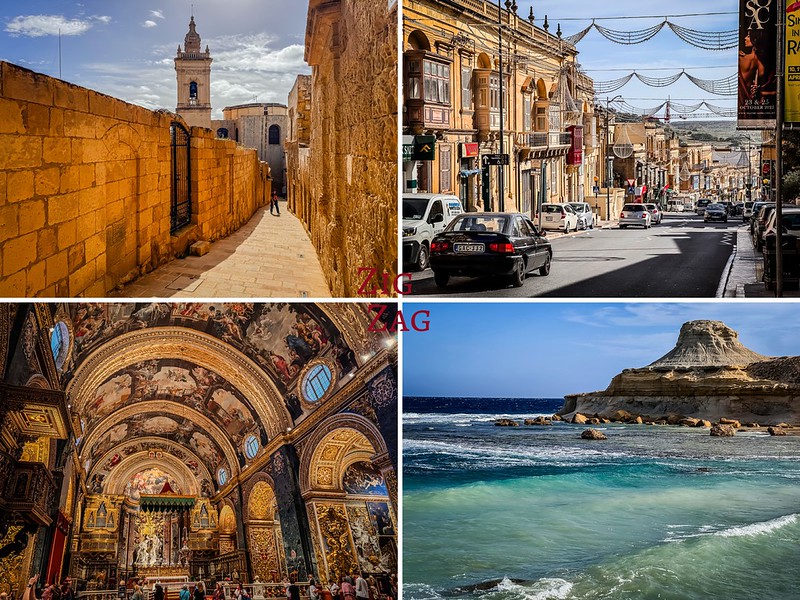
// On this page, no sponsored content. Just a few affiliate links.
// If you use them, I’ll get a commission at no extra cost to you (read more).
Visiting Malta in winter: is it worth it?
My opinion
Yes, visiting Malta in winter is absolutely worth it. The archipelago packs a remarkable density of heritage: prehistoric temples predating the Egyptian pyramids, UNESCO-listed fortified cities, rich museums and contrasting coastal landscapes. And winter is precisely the season when you can discover all of this at your own pace.
The weather stays pleasant: between 12°C and 18°C during the day, which is very well suited to long walks and sightseeing. A few rainy or windy days are possible, but they won’t derail a well-planned trip.

Advantages
- Major tourist sites are significantly less crowded than in summer
- Mild temperatures (12°C to 18°C) are well suited to extended walks
- Accommodation prices drop considerably outside the holiday period
- The Hal Saflieni Hypogeum, whose tickets sell out very quickly, is easier to book in low season
- Museums, monuments and historical sites remain open for the most part
- The Christmas and New Year period offers a particularly special festive atmosphere
- Local cuisine can be enjoyed in comfort, without the summer queues

Disadvantages
- Days are shorter, reducing time for outdoor exploration
- Some days can be rainy and windy, as is often the case in the Mediterranean in winter
- Swimming in the sea is not very appealing, with water temperatures dropping to around 15°C
- Water activities (diving, kayaking, snorkelling) are reduced or subject to weather conditions
- Some opening hours may be reduced compared to the high season
- Some hotels close during the winter months


Where to Stay in Malta – My Favorite Spots:
- Valletta – See best-rated accommodations
- St. Julian’s – See best-rated accommodations
- Victoria (Gozo Island) – See best-rated accommodations
My Top Picks:
- Cugo Gran Macina (5 stars) – see photos and availability
- The Gomerino Hotel (4 stars) – see photos and availability
See my article on the best places to stay in Malta (coming soon)
Weather, temperatures and conditions
The Maltese winter is mild compared to most of Europe.
Daytime temperatures range between 12°C and 18°C, and nights rarely drop below 8°C.
The sea, which stays above 15°C, keeps the archipelago’s climate relatively temperate throughout the cold season.
Rainfall is possible, particularly in December and January, in the form of sometimes heavy but short showers. The wind can pick up without warning — a common reality in the central Mediterranean.
In good weather, the winter light is remarkable, especially on the cliffs and fortified ramparts. I recommend packing layers and a light waterproof jacket — there is no need to bring heavy winter gear.

My tips for renting a car in Malta
- Compare prices on Discovercars, my favorite platform and one of the highest-rated
- Book your car early for more options and better prices
- Don’t rent a car that’s too big, as the roads are narrow.
What to do in Malta in winter?
Malta in winter is above all a heritage and cultural destination. Mild temperatures encourage long sightseeing days on foot, and almost all monuments and museums remain accessible. Check out my article on the best attractions in Malta or here are the must-sees to plan for:
Valletta, the UNESCO-listed capital

Valletta, founded in 1566 by the Order of Saint John, is one of the most heritage-dense capitals in the world. It can be crossed entirely on foot in 15 minutes, making it particularly well suited to winter days. I consider it the natural starting point for any stay in Malta.
St John’s Co-Cathedral is the major monument: its austere façade gives nothing away of the interior, entirely covered in paintings, gilding and baroque sculptures. The oratory houses two works by Caravaggio painted in 1608, including The Beheading of Saint John the Baptist, his largest painting. You can book a guided tour here.
Nearby, the Upper Barrakka Gardens offer the most sweeping view over the Grand Harbour and the Three Cities, and in the late afternoon the light on the fortifications is particularly beautiful. The Grand Master’s Palace on Republic Street rounds off the visit: its state rooms adorned with frescoes and its armoury of 5,000 pieces are well worth an hour and a half of exploration. A combined ticket with the art museum and the archaeological museum is available.
Mdina, the Silent City

Perched on a hilltop in the centre of the island, Mdina is the former capital of Malta. Fewer than 300 people still live there, earning it the nickname “the Silent City”. In winter, the calm that reigns in its cobbled streets is even more pronounced than usual — ideal for soaking up the atmosphere of the place!
St Paul’s Cathedral dominates the main square; built in the late 17th century in baroque style, its ceiling frescoes by Sicilian painter Mattia Preti create a striking perspective effect. Just nearby, Bastion Square offers an open panorama over much of the island. I recommend allowing half a day to a full day for Mdina and the neighbouring town of Rabat, where the Catacombs of Saint Paul are located. Save time by buying your ticket in advance.

It’s time to book!
Compare everything: companies, prices, schedules, and availability.
The prehistoric temples: an exceptional heritage

Malta is home to a collection of megalithic temples dated between 3600 and 2500 BC, predating the Egyptian pyramids and Stonehenge. This is one of the most surprising aspects of the archipelago for visitors who don’t expect it.
On the southern coast of the main island, the UNESCO-listed temples of Hagar Qim and Mnajdra can be visited together: Haġar Qim impresses with its limestone blocks standing over 5m high, while Mnajdra is oriented so that sunlight illuminates its interior at the equinoxes. Allow 1h30 to 2 hours, including the interactive museum. The Hal Saflieni Hypogeum in Paola is a unique underground temple: carved across three levels between 4000 and 2500 BC, it served as a place of worship and a necropolis (more than 7,000 people were buried there). Visitor numbers are limited to 80 per day (book your tickets online as early as possible, even in low season).
On the island of Gozo, the Ggantija temples date back to around 3600 BC. Their outer walls standing over 5m high, made of blocks that can weigh more than 50 tonnes, give a sense of the scale of the construction. See excursions to Ggantija.
The Three Cities: Vittoriosa, Senglea, Cospicua

Facing Valletta, on the other side of the Grand Harbour, the Three Cities were the first settlement of the Knights of the Order of Saint John in Malta in 1530. They are therefore older than the capital. The atmosphere is different there: more residential, more local, with less tourism than in Valletta.
Vittoriosa is the richest in heritage. It is home to Fort Saint Angelo, a fortress that played a central role during the Great Siege of 1565, when the Knights held out for four months against the assault of the Ottoman Empire. Book a guided tour with a boat trip.
Gozo: the Citadel of Victoria and the Sanap cliffs

Gozo, the second island of the archipelago, is reached by ferry from Cirkewwa (approximately 25 minutes crossing, departures every 30 to 45 minutes). The island is more rural and quieter than Malta. Victoria, the capital, deserves at least half a day. Its Citadel dominates the island from its fortified promontory: inhabited since the Neolithic and reinforced in the 17th century by the Knights, it offers a 360° panorama over Gozo from its ramparts and, on a clear day, over the neighbouring islands.
I loved the Cathedral of the Assumption inside the Citadel: its trompe-l’œil ceiling, painted by Antonio Manuele in the 18th century to simulate a dome that funds never allowed to be built, is an architectural curiosity not to be missed.
On the southern coast of Gozo, the Sanap cliffs drop over 130m into the sea. Less visited than the Dingli cliffs on the main island, they offer an open view over the Mediterranean and unspoilt surroundings. See excursions to Gozo.
Maltese culture: gastronomy, traditional boats and living heritage

Maltese culture bears the traces of centuries of successive influences: Phoenician, Roman, Arab, Norman, Aragonese, French and British. This layering can be read in the Maltese language: Arabic in origin, written in the Latin alphabet, rich in borrowings from Italian and English — just as much as in the cuisine and architecture.
On the food front, a few local specialities are well worth trying: pastizzi, flaky pastries filled with ricotta or peas, can be found for a few cents in pastizzerias; ftira is a filled bread similar to a focaccia; fenkata (rabbit stew) is considered the national dish. I recommend visiting the fish market in Marsaxlokk on Sunday morning: the luzzu, those colourful fishing boats adorned with the Eye of Osiris on the prow, are one of Malta’s most recognisable symbols.
In winter, the market is less crowded than in summer, making it possible to observe the place and its people in a more authentic atmosphere.

My favorite activities in Malta:
- Boat trip to Comino Island and the Blue Lagoon – see options
- Kayaking excursions – see options
- Culinary tours – see options
- ATV tours – see options
How to get to Malta?
Malta has an international airport, Malta International Airport (MLA), located about ten kilometres from Valletta. Many European airlines serve the archipelago directly from Paris, Brussels, Geneva and other major cities. In winter, frequencies are reduced compared to summer but connections remain regular.
On the ground, the bus network covers the entire main island with Valletta as the central hub. Renting a car is useful for reaching isolated sites such as the Dingli cliffs or the temples in the south — bear in mind that driving is on the left in Malta, a legacy of the British era, and roads can be narrow. For Gozo, the ferry from Ċirkewwa runs frequently (every 30 to 45 minutes, 25-minute crossing). For Comino, boats depart from Ċirkewwa or Mġarr depending on the season; services are reduced in winter.

Christmas in Malta
The Catholic faith occupies a central place in Malta. The archipelago has more than 360 churches for a territory of 316 km²! And the Christmas period is one of its most visible expressions. The streets of Valletta, Mdina and the villages are covered in lights and decorations from the end of November.
Nativity scenes are a strong tradition: many parishes organise living cribs and midnight masses that residents attend in large numbers. Christmas markets are set up in several towns, including Valletta, with stalls selling crafts and regional products.
The mild, illuminated December nights in Malta lend themselves particularly well to walks through the old towns. It is also the ideal time to discover the alleyways of Vittoriosa or the ramparts of the Citadel of Gozo in a festive light.

New Year’s Eve in Malta
New Year’s Eve in Malta is celebrated with great enthusiasm, particularly in Valletta and the resort towns of St Julian’s and Paceville. Fireworks light up the Grand Harbour at midnight: a spectacle best watched from the Upper Barrakka Gardens or the city ramparts with a clear view over the harbour.
I recommend booking well in advance if you are planning to dine out that evening: tables fill up quickly, particularly in restaurants with a terrace overlooking the waterfront. The atmosphere in the bars and clubs of Paceville is international and festive until the early hours.
Plan your trip to Malta!
- Best things to do in Malta
- Best things to do in Gozo
- Most beautiful churches (coming soon)
- Rent a car in Malta
- When to visit Malta (coming soon)
- Where to stay in Malta (coming soon)
- Itineraries: 1 week
Plan your unforgettable trip to Malta!

- maps to help you plan
- handpicked beautiful spots
- Practical information, including GPS coordinates
- photos to help you choose
COMING SOON


