September is one of my favorite times to visit Iceland.
This transition between summer and fall offers the perfect balance: tourist sites remain accessible without the summer crowds, the days are still light enough to explore, and the nights are just long enough to catch the first glimpses of the Northern Lights.
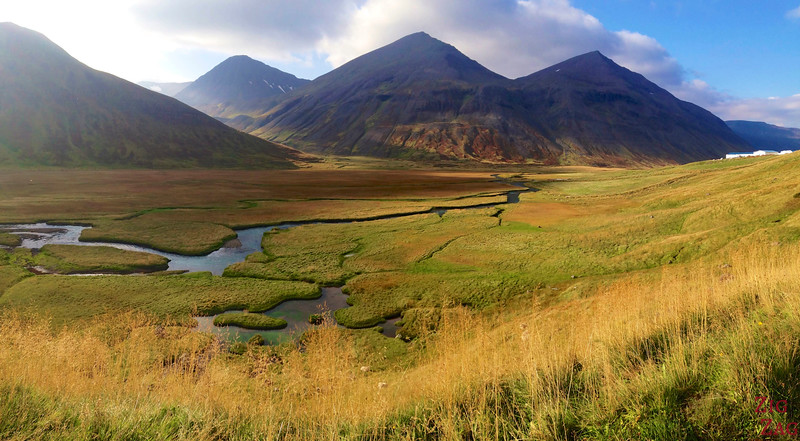
I loved this special atmosphere, with Iceland’s natural landscape adorned in flamboyant autumn colors.
Here are all my reasons for choosing this month to discover this impressive country.
For more options, see my article: When to go to Iceland.
// On this page, no sponsored content. Just a few affiliate links.
// If you use them, I’ll get a commission at no extra cost to you (read more).
1. Ideal tourist numbers
The peak summer season officially ends at the end of August in Iceland. From the beginning of September, visitor numbers drop significantly. I particularly enjoyed this reduction in numbers at must-see sites such as Gullfoss waterfalls and Thingvellir National Park. You can take your photos without waiting for hours and enjoy the scenery in a more authentic and peaceful atmosphere.
Accommodation rates also become more affordable than in July and August, without dropping to the low winter prices. It’s the ideal time to make the most of your budget while enjoying pleasant visiting conditions.

2. Roads are passable
Unlike the winter months when some roads and sites close, September still allows access to the entire country. Circular Route 1 remains passable without special winter equipment and without difficulty.
The roads in the Highlands (unpaved F-roads) begin to close gradually from mid-September depending on weather conditions, but you can still use them in early September.
An ideal time to go on a road trip!

Need to rent a car in Iceland?
My tips:
- Compare prices on my favorite platform: Discovercars.com – one of the best rated comparison sites!
- Prefer a compact car for the narrow streets in villages
- Consider their full coverage option – it for peace of mind!
- Book early to have a large choice of vehicles!


3. Perfect balance of light
September offers a remarkable compromise in terms of light. Days still last between 13 and 15 hours at the beginning of the month, giving you plenty of time to explore natural sites, drive along the circular road, and enjoy hiking.
Unlike summer, when the sun hardly ever sets, you will find a day-night rhythm that makes it easier to sleep.

This nocturnal darkness has one major advantage: it allows you to observe the Northern Lights. From mid-September onwards, the nights become dark enough to see these spectacular light phenomena. This means you can combine the advantages of long days for sightseeing with nights that are ideal for viewing the Northern Lights. It is impossible to enjoy this in June and July, when the midnight sun keeps the sky permanently lit.

Where to stay in Iceland?
My favorites:
- Reykjavik, capital city: see best rated accommodations – or my article on where to stay
- Selfoss, between Golden Circle and South Coast: see best rated accommodations
- Vik, near waterfalls and glaciers: see best rated accommodations
- Höfn, gateway to the East fjords: see best rated accommodations
- Egilsstadir, between fjords and North Iceland: see best rated accommodations
- Reykjahlid, for the wonders of Lake Myvatn: see best rated accommodations
- Akureyri, capital of the North: see best rated accommodations
- Grundarfjordur, on the Snaefellsnes Peninsula: see best rated accommodations

4. Landscapes ablaze with color
Iceland’s natural landscape undergoes a dramatic transformation in September. The low-lying vegetation covering the hills takes on stunning orange-red hues. The moss and lichen-covered moors turn copper and ochre. This autumnal palette contrasts beautifully with the deep green of the still-irrigated meadows and the ever-present volcanic black.

I particularly enjoyed photographing these colorful landscapes in the low September light. The angle of the sun creates incomparable golden hues, especially at the end of the day. Photographers will particularly appreciate this soft light and saturated colors.
However, there are few trees in Iceland, so there isn’t really any colorful foliage. Only in a few places.

5. All facilities remain open
All restaurants, museums, tourist attractions, and activity providers are operating as usual. You will not experience any seasonal restrictions, unlike in October and November when many establishments reduce their hours or close temporarily.

Weather in September
Let’s be honest: Icelandic weather remains unpredictable every month, including September. You need to be prepared for all conditions. Temperatures generally range between 5°C and 12°C. The south and Reykjavik generally enjoy milder conditions than the north.
Rainfall remains frequent but less abundant than in winter. Expect an average of 10 to 15 days of rain per month. The wind can blow strongly, particularly on the south coast and in open areas. Be sure to pack layers of clothing, a good quality waterproof windbreaker, and sturdy waterproof hiking boots.
Storms are still possible but less violent than in the middle of winter. Check the daily weather forecast on vedur.is and adjust your itinerary accordingly.

Things to do in Iceland in September
Like every other summer month, you’ll be spoiled for choice when it comes to activities:
- Drive around Route 1
- Admire the waterfalls
- Explore the lava fields
- Visit the glacial lagoons: Jokulsarlon, Fjallsarlon, and Diamond Beach, with its icebergs
- Admire the black sand beaches
- Hunt for the Northern Lights
- Descend into lava caves
- Walk on glaciers
- …
See my itinerary recommendations: 5 days, 1 week, 10 days, 2 weeks.

What you can’t see in Iceland in September
Conditions change dramatically from season to season in Iceland.
So, to avoid disappointment, be aware that you won’t see:
- Lupine flowers (May, June)
- The midnight sun (June)
- Ice caves (winter)
- Frozen waterfalls (winter)
- Puffins (summer)
That’s okay, it’s a good excuse to come back!
September events
September hosts several interesting cultural events. The Reykjavik International Film Festival usually takes place in late September/early October and offers a program of high-quality independent films and documentaries.
Réttir, the traditional gathering of sheep, is the major rural event in September. Farmers gather their flocks that have come down from the mountains for the winter. These festive gatherings are a great opportunity to discover Icelandic agricultural traditions.

Practical tips for September
Book your accommodation: Even though visitor numbers are down, I recommend booking your accommodation in advance, especially in popular areas such as Reykjavik, Vik, or the Mývatn lake region. Good quality establishments fill up quickly.
Car rental: A standard vehicle is more than adequate for the Ring Road in September. 4x4s are only essential for the F-roads in the Highlands, which gradually close during the month.
Northern Lights: Download the Aurora Forecast app, which shows solar activity and visibility forecasts. Choose areas far from cities and wait for clear weather. Patience is your best friend.
Plan your trip to Iceland this Summer:
Plan your dream trip in Iceland with my guide
8 maps to easily plan your itinerary.
100+ pre-selected locations.
GPS coordinates direct to the carparks.
Tips to make the most of your time.
130+ original photos to help you choose


