When to visit Malta?
Well, it depends on your priorities.
Here is my complete guide to help you choose the best time based on:
- The weather (temperature, rain, wind…),
- Crowds and prices,
- Sea temperature and when to swim in Malta,
- Activities (diving, hiking, culture…),
- Festivals and events,
- Winter sunshine.
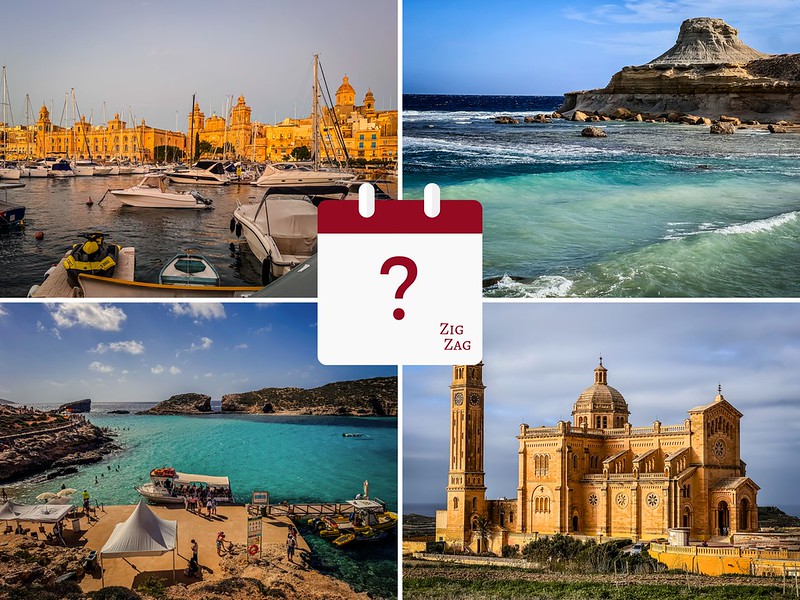
// On this page, no sponsored content. Just a few affiliate links.
// If you use them, I’ll get a commission at no extra cost to you (read more).
When to Visit Malta – Summary
Best Month to Visit Malta
Malta is a Mediterranean destination that can be visited year-round. My favourite month is October: the summer heat has faded, the sea is still warm enough for swimming, there are fewer tourists and the golden autumn light beautifully highlights the golden limestone façades of Valletta and Mdina.
Best Time to Visit Malta
It depends on what you are looking for:
- Best time to sunbathe on the beach: June to September
- Best time to swim in the sea: July to October
- Best time to explore historical sites and go hiking: March to May and October to November
- Best time for scuba diving: May to October, with optimal visibility in summer
- Best time to escape the European winter: December to March

When to Visit Malta – Key Criteria
If you want to cut straight to the point, here is a summary based on your priorities:
- Weather, temperatures, wind –
Malta enjoys a Mediterranean climate characterised by hot, dry summers and mild winters. In July and August, temperatures average 32°C. From December to February, they range between 12 and 16°C during the day. Wind is present year-round: the sirocco, a hot wind from North Africa, blows mainly in spring and summer and can cause sporadic extreme heat. - Swimming –
The Mediterranean Sea reaches 26°C in August and September, making this the ideal period for swimming. From October onwards, the temperature remains pleasant at around 23°C. In winter, it drops to approximately 15°C. - Crowds –
July and August are the busiest months. The Easter and Christmas periods also attract large numbers of visitors. November, January and February are the quietest months, with noticeable advantages on prices. - Prices –
Accommodation and flight prices are significantly higher during the peak summer season and during European school holidays. The best deals are found in the low season, from November to March.

Where to Stay in Malta – My Favorite Spots:
- Valletta – See best-rated accommodations
- St. Julian’s – See best-rated accommodations
- Victoria (Gozo Island) – See best-rated accommodations
My Top Picks:
- Cugo Gran Macina (5 stars) – see photos and availability
- The Gomerino Hotel (4 stars) – see photos and availability
See my article on the best places to stay in Malta (coming soon)
When to Go to Malta – Weather and Conditions
Climate
Malta’s climate is typically Mediterranean. Summers are hot, dry and sunny; winters are mild and slightly rainy. Rain is rare between June and August. The island benefits from more than 300 sunny days per year, one of the highest sunshine rates in Europe. I am always struck by the quality of the light in Malta: the local limestone, known as “Maltese stone”, reflects the sun and gives the landscapes a very distinctive warm hue.
The Three Islands: Malta, Gozo and Comino
The Maltese archipelago comprises three main islands – Malta, Gozo and Comino – whose weather conditions are broadly similar. Gozo is slightly greener and receives a little more rain in winter. Comino, almost uninhabited, is visited mainly in summer for its famous Blue Lagoon, whose turquoise waters attract thousands of swimmers every summer day. Outside the tourist season, you can visit it in near-perfect tranquillity.
Day Length and Sunshine
Malta is situated at a more southerly latitude than most Western European countries. Days are therefore slightly longer in winter. In December, the sun sets around 5 pm, but you enjoy an average of 5 to 6 hours of sunshine per day. In summer, days exceed 14 hours and daily sunshine reaches 10 to 11 hours. This allows for a great deal of sightseeing! Seee my selection of the best attractions.

Rain in Malta
Rainfall is concentrated between October and March. November and December are the wettest months. These showers are generally short but sometimes intense. Worth noting: Malta lacks freshwater resources, which makes these winter rains of strategic importance to the island. From June to September, the risk of rain is almost nil.
Wind in Malta
Wind is a part of daily life in Malta. The sirocco, a hot wind from the Sahara, can push temperatures above 40°C on some spring or summer days. The gregale, a north-easterly wind, blows in winter and can be strong. For sailing or kitesurfing enthusiasts, these conditions are often favourable. For everyone else, it is worth keeping these factors in mind when planning sea excursions.
Crowds and Prices
The peak tourist season runs from June to September. It is during these months that the most popular beaches and attractions – such as the Blue Lagoon in Comino or the ramparts of Valletta – welcome the greatest number of visitors. The Easter and Christmas periods also generate a notable influx. By contrast, I find that the months of October to December and January to March offer a more relaxed experience: prices drop, queues at attractions disappear and the locals reclaim their streets.


It’s time to book!
Compare everything: companies, prices, schedules, and availability.
Sea Temperatures in Malta – When to Swim
The Mediterranean Sea warms up gradually throughout the year. Swimming is possible year-round, depending on your sensitivity to water temperature.
Sea temperature in Malta varies:
- In January, February, March: between 14 and 15°C
- In April and May: between 16 and 19°C
- In June and July: between 22 and 25°C
- In August and September: between 26 and 27°C
- In October: around 23°C
- In November and December: between 18 and 20°C

When to Dive in Malta
Malta is one of the best diving destinations in the Mediterranean. The waters are clear, visibility can reach 30 to 40 m in summer, and the sites are varied: wrecks, underwater caves, drop-offs and reefs. I consider this activity one of the island’s greatest assets, accessible to both beginners and experienced divers alike.
The best period for diving runs from May to October. Visibility is at its best between June and September, when the sea is calmest. Outside this period, diving is still possible but conditions may be less stable.

My tips for renting a car in Malta
- Compare prices on Discovercars, my favorite platform and one of the highest-rated
- Book your car early for more options and better prices
- Don’t rent a car that’s too big, as the roads are narrow.
Best Time to Visit Malta – Other Criteria
When to Visit Historical Sites in Malta
Malta is an open-air museum: megalithic temples among the oldest in the world, fortifications of the Order of Saint John, Roman catacombs, baroque palaces. These sites can be visited year-round, but I strongly recommend avoiding July and August for exploring them on foot. The heat is intense and the crowds are significant in places like Valletta, Mdina or the Temples of Ħaġar Qim. Spring and autumn offer far more pleasant conditions for strolling through the lanes and visiting museums.

When to Hike in Malta
Malta is not a hiking destination in the alpine sense, but the island offers particularly enjoyable coastal walks and rural trails. The Dingli Cliffs, the Victoria Lines trail or the country paths of Gozo are well worth exploring on foot. The best period runs from November to April: temperatures are mild, the vegetation is green and the off-season light makes the landscapes look especially beautiful. Avoid summer for this activity, as the heat and lack of shade can make the effort uncomfortable.

Malta for Winter Sunshine
From December to March, Malta is an ideal destination for anyone wishing to escape the grey skies of Northern Europe. With 5 to 6 hours of sunshine per day and temperatures between 12 and 17°C, you can stroll in a light coat, visit sites without queuing and enjoy café terraces outdoors. Swimming is possible but cool. I particularly appreciate this period for exploring Valletta, the European Capital of Culture in 2018, whose museums and theatres are more accessible out of season.

My favorite activities in Malta:
- Boat trip to Comino Island and the Blue Lagoon – see options
- Kayaking excursions – see options
- Culinary tours – see options
- ATV tours – see options
Malta’s Seasons Described
Spring in Malta (March to May)
Spring is one of the most pleasant seasons in Malta. Temperatures range between 16 and 23°C, the vegetation is green, Gozo’s fields are covered in wildflowers and the coastlines are still relatively quiet. It is also the time of Carnival and Holy Week, two important events in the Maltese calendar. I find this to be the ideal season for combining culture, nature and relaxation without the drawbacks of peak season.

Summer in Malta (June to September)
The Maltese summer is hot, dry and very sunny. Temperatures regularly exceed 30°C in July and August. Beaches such as Mellieħa Beach, Golden Bay or the Blue Lagoon in Comino are very busy. It is also the season of village feasts, the festas, which enliven the island’s villages every weekend with fireworks, processions and open-air concerts. I advise booking your accommodation well in advance if you travel in summer, as availability fills up quickly.
Autumn in Malta (October to November)
Autumn is perhaps the best season to discover Malta. Temperatures remain pleasant, between 20 and 27°C in October. The sea is still warm enough for swimming. The first rains bring the landscapes back to life after the summer drought. There are fewer tourists and prices are more affordable. It is also a favourable time for hiking and exploring historical sites without the constraints of the heat. In November, conditions gradually cool and occasional showers make an appearance.

Winter in Malta (December to February)
Winter in Malta is mild by European standards. Temperatures range between 12 and 17°C during the day. Rainy spells are to be expected, particularly in December and January, but sunny days remain frequent. It is the low tourist season: the island lives at a more local pace and heritage sites can be visited in privileged conditions. The Christmas lights in Valletta and in the villages are tastefully done. The Malta Carnival, held in February, does however attract many visitors for a short period.
Events to Attend or Avoid
Depending on your interests, it may be useful to take the following events into account when choosing your dates:
- January/February
Malta Carnival in Valletta and Nadur (Gozo)
Malta Marathon (Valletta) - March/April
Holy Week: religious processions in many villages - May
Art Explora Festival, Valletta Arts Festival - June to September
Village festas every weekend throughout the archipelago, with fireworks and processions - October
Notte Bianca in Valletta: cultural night with museums open free of charge and open-air performances - December
Christmas market in Valletta and lights in the main towns
Plan your trip to Malta!
- Best things to do in Malta
- Best things to do in Gozo
- Most beautiful churches (coming soon)
- Rent a car in Malta
- When to visit Malta (coming soon)
- Where to stay in Malta (coming soon)
- Itineraries: 1 week
Plan your unforgettable trip to Malta!

- maps to help you plan
- handpicked beautiful spots
- Practical information, including GPS coordinates
- photos to help you choose
COMING SOON


