To make the most of the Maltese archipelago, the best thing is to set off on an adventure in your own vehicle: to explore millennia-old temples, to drive along rugged coastlines and to discover fortified villages at your own pace!
Here is my practical guide to renting a car in Malta without stress.
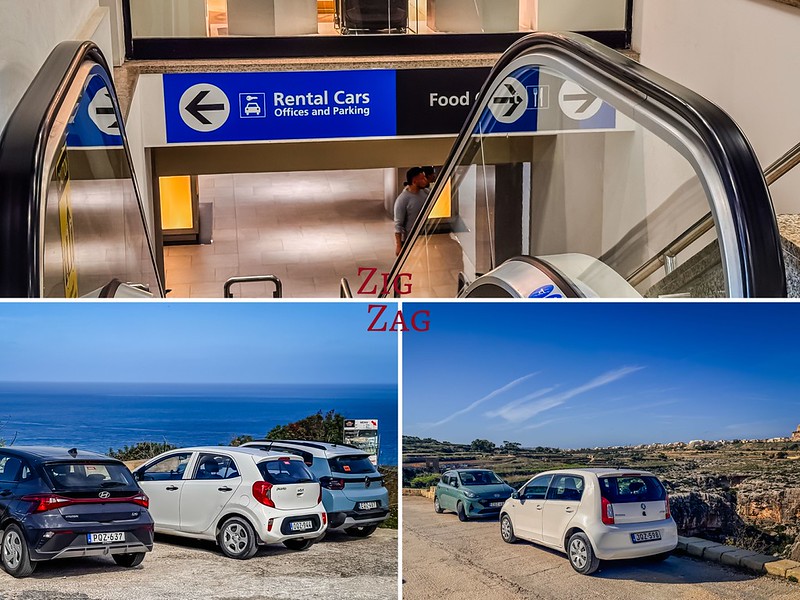
// On this page, no sponsored content. Just a few affiliate links.
// If you use them, I’ll get a commission at no extra cost to you (read more).
1 – Where to rent a car in Malta: best agencies
My favourite platform
My first reflex is to check the offers on DiscoverCars.
This platform allows me to easily compare offers from different rental companies: prices and conditions. And every time, I find great deals.
Where to pick up your car?
If you arrive by plane and head straight off on a road trip, pick up your car at Malta International Airport (MLA), located in Luqa. It is easier to get used to a vehicle on main roads than in the narrow streets of Valletta.
Here is the main car rental hub in Malta:
- Malta International Airport (MLA) in Luqa: see offers

When to rent a car?
Malta is a very popular destination, especially in summer. I therefore recommend booking as soon as you have your travel dates, to have the best choice of cars and better prices!
You won’t find last-minute deals in high season. As soon as you’ve chosen your dates, book the car! The archipelago being small, the available vehicle fleet is limited.
What are the best car rental agencies in Malta in 2026?
Some of the highest-rated companies are:
- Sixt
- Behr Car rental, a local company
- Auto Union
So far, I’ve only had positive experiences with no issues. When you read reviews, don’t forget that the millions of people who had no problems don’t take the time to leave comments…

2 – What rental car for Malta?
My 3 main tips for choosing your car are:
- Not too wide
- An engine powerful enough for hills
What car size?
Don’t get a car that’s too wide or too long. The streets in old Maltese villages are often very narrow, sometimes barely wide enough for a single vehicle. I recommend the mini, economy or compact categories, which are perfectly suited for exploring the island.
Malta is a small archipelago: distances are short, so you don’t need a large vehicle for your luggage either.

What engine?
Malta is relatively flat overall, but some roads have quite steep climbs and descents, particularly around the Dingli Cliffs and in the valleys. A medium-powered engine is sufficient.
Automatic or manual?
As in many European countries, most cars are manual.
Rental agencies offer automatic cars, but they are often more expensive. And there are fewer of them. So book early.
On Discovercars.com, you can use the “Automatic transmission” filter on the left, if that’s a must-have for you.


Where to Stay in Malta – My Favorite Spots:
- Valletta – See best-rated accommodations
- St. Julian’s – See best-rated accommodations
- Victoria (Gozo Island) – See best-rated accommodations
My Top Picks:
- Cugo Gran Macina (5 stars) – see photos and availability
- The Gomerino Hotel (4 stars) – see photos and availability
See my article on the best places to stay in Malta (coming soon)
3 – Licences, rules and credit cards
Minimum age
The official driving age in Malta is 18.
However, most car rental companies in Malta require:
- being over 21 years old
- having held a driving licence for at least one year
- additional fees apply if you are under 25
Do you need an international driving licence?
To drive in Malta (for a short stay), you can use your home country’s driving licence if:
- it has a licence number
- it has a photograph
- it has an expiry date
- it is written in Latin script
European, American, Canadian, Australian licences and others are accepted.
Malta is part of the European Union: if you hold a European driving licence, no additional formalities are required. For other countries whose licences are not written in Latin script, an international driving licence is necessary.

Do you need a credit card?
The answer is “maybe”.
If you rent a car without taking the rental company’s zero excess option, they will systematically take a deposit on your credit card. Some rental companies refuse to do this with a debit card.
If you take the rental company’s insurance that brings the excess to zero, you don’t need a credit card.
4 – Getting the right insurance
Mandatory insurance
Third-party liability insurance is mandatory in Malta.
It is automatically included in the price of all car rentals.
Additional cover
Maltese roads are generally in good condition, but narrow streets and sometimes aggressive local driving increase the risk of minor scrapes. I recommend taking additional cover to reduce the amount you’d have to pay in case of damage.
3 main options:
Option 1
Your personal car or home insurance covers rental cars (but read the fine print carefully, this is rare).
Option 2
Take the insurance from the booking platform.
Advantage: better price than the rental company’s own.
Disadvantage: you will need to leave a security deposit when picking up the car and pay upfront in case of damage. I have used the insurance from DiscoverCars several times. Reimbursements were processed without any issues within 7 days.
Option 3
Take the rental company’s additional cover. It’s more expensive, but you won’t have to pay anything upfront and there’s no paperwork to deal with in case of damage.


My favorite activities in Malta:
- Boat trip to Comino Island and the Blue Lagoon – see options
- Kayaking excursions – see options
- Culinary tours – see options
- ATV tours – see options
5 – Accessing your rental car
At Malta International Airport, it’s easy to find the car rental agencies. The counters are located in the arrivals hall. The cars are parked in dedicated car parks near the terminal.
The airport isn’t very large, so you won’t have to walk far. Some local agencies offer a delivery service directly to your accommodation, which can be an interesting alternative if you’re not picking up the car right when you arrive.

6 – Check your vehicle at pick-up
Vehicle inspection
If you’ve taken the rental company’s additional cover to bring the excess to zero, you don’t need to check the condition of the car, but still make sure the essential equipment is there.
Otherwise, I recommend (just for peace of mind) walking around the car, photographing any damage and informing the agency if it’s not noted on the pick-up document.
Pay attention to:
- the fuel level and mileage, making sure they match the paperwork
- the entire exterior of the car for dents and scratches
- the roof – It’s often forgotten, but it may be checked when you return the car.
- the underside of the bumpers
- the back of the wing mirrors
- the interior
- the condition of the tyres
- the condition of the mudguards (fenders above the wheels)
- the spare tyre (if applicable, fewer and fewer cars have a spare tyre)
Mandatory equipment in the car
In Malta, the following equipment must be available:
- Warning triangle (mandatory)
- First aid kit (mandatory)
- Fire extinguisher (mandatory for rental cars but not for private vehicles)
- Reflective vest (recommended)

Find out about toll management
Good news: there are no tolls in Malta. All roads are free. So you don’t need to worry about vignettes or toll transponders.
Find out about crossing to Gozo
You’ll most likely want to visit the island of Gozo during your stay in Malta. The good news is that you can take the ferry from Ċirkewwa to Mġarr with your rental car. The crossing takes about 25 minutes.
Before heading to Gozo, check with your rental company that the ferry crossing is allowed. Most agencies permit it, but some insurance conditions may vary.


It’s time to book!
Compare everything: companies, prices, schedules, and availability.
7 – Preparing to drive in Malta
Driving in Malta requires some attention, but it’s not particularly difficult once you get the hang of it. The main change for many travellers: you drive on the left. Malta kept this rule from the British period. The first few minutes can feel confusing, but you adapt quickly.
General rules
- Driving is on the left
- The steering wheel is on the right
- Respect the speed limits:
- In town: 50 km/h
- Outside built-up areas: 80 km/h
- Blood alcohol limit: 0.08%
- Seatbelts are mandatory for all passengers
- Using a phone while driving is prohibited
- Headlights must be on in poor visibility
- At roundabouts, priority goes to vehicles already on the roundabout

Main hazards
The main hazards on Maltese roads are:
- Driving on the left, which can be unsettling for those not used to it
- Narrow roads in villages, sometimes barely wide enough for two vehicles
- The condition of some secondary roads, where the surface can be damaged
- Local driving that can be fast and unpredictable
- Difficult parking in tourist areas and large towns
- Frequent traffic jams around Valletta, Sliema and St Julian’s during rush hour
What to do in case of an accident?
If anyone is injured or there is a dispute, the emergency number in Malta is 112. The best course of action is:
- contact the emergency services
- contact the police
- contact your rental provider

Plan your unforgettable trip to Malta!

- maps to help you plan
- handpicked beautiful spots
- Practical information, including GPS coordinates
- photos to help you choose
COMING SOON
Frequently asked questions
Should you rent a car in Malta?
I recommend it if you want to explore the island beyond Valletta and the main tourist areas. Malta has a bus network, but frequencies are sometimes limited and journeys are long. A car gives you the freedom to discover the prehistoric temples, the Dingli Cliffs, the southern villages and secluded coves at your own pace.
On the other hand, if you’re only staying in Valletta or Sliema, a car isn’t essential.
Do you need a 4×4?
No, a 4×4 is not necessary in Malta. The roads are paved and a standard vehicle is more than enough. A small car will actually be more practical in the narrow village streets.
What to do in case of a fine?
You are responsible for any fines during the rental period.
However, it can take up to 3 months before a fine is reported to the rental company. In that case, they will send you proof, charge you for it and most likely add an administrative fee.
What to do if there’s a problem with the car?
Don’t lose your rental contract.
On it, you’ll find the steps to take if you have a problem with your car.
Most companies use a roadside assistance service and the number will be on the contract.
You can then contact the rental company to see how to get the car replaced.
What budget is needed?
Prices range from 15 to 70 EUR per day depending on the season, vehicle type and insurance chosen.
In summer, prices are at their highest. In the low season (November to March), you’ll find much more affordable rates.
Plan your trip to Malta!
- Best things to do in Malta
- Best things to do in Gozo
- Most beautiful churches (coming soon)
- Rent a car in Malta
- When to visit Malta (coming soon)
- Where to stay in Malta (coming soon)
- Itineraries: 1 week
Plan your unforgettable trip to Malta!
- maps to help you plan
- handpicked beautiful spots
- Practical information, including GPS coordinates
- photos to help you choose
COMING SOON


